A Practical Guide to Conveyor Belt Pulley Lagging
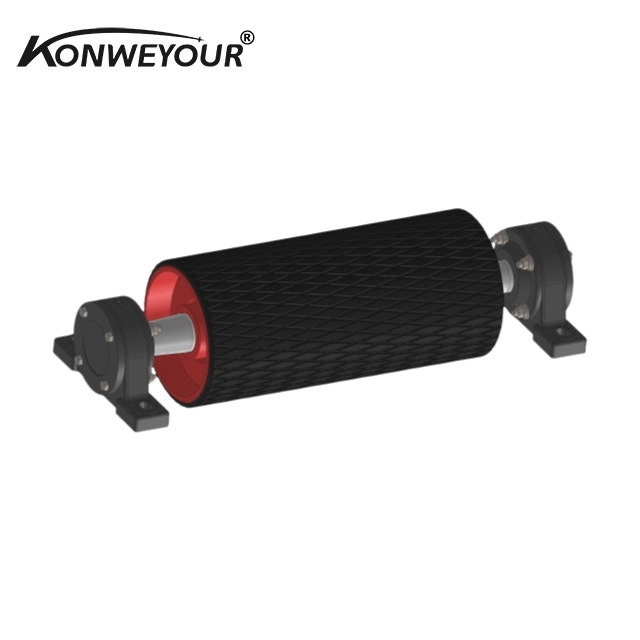
Having spent over a decade in the industrial equipment arena, conveyor belt systems have been a constant companion. And one component that’s often overlooked yet critical for smooth operation is conveyor belt pulley lagging. If you’re new to the term, pulley lagging refers to the rubber or composite coating applied to the surface of pulleys to improve grip, extend equipment lifespan, and reduce operational headaches — kind of like giving your conveyor belt that extra “grip” it desperately needs.
Oddly enough, many engineers and site managers I’ve talked with initially underestimate just how much pulley lagging impacts uptime. But frankly, the right lagging can be a game-changer, preventing slippage, minimizing belt wear, and even helping with alignment issues in dusty or wet environments.
In terms of design, the lagging material usually comes down to two main types: natural rubber and ceramic. Natural rubber is flexible and abrasion-resistant, great for moderate loads and environments, while ceramic lagging is tougher, often used in heavy industrial settings that deal with abrasive materials and require higher friction.
What surprised me early on in my career was the amount of testing huge suppliers put into their lagging products — tensile strength, adhesion quality, and elasticity tests help ensure a long-lasting bond to the pulley drum. For example, ceramic lagging tiles are often embedded into rubber, combining the strength of ceramic with the cushioning effect of rubber.
Real-world usage depends a lot on your application specifics — outdoor installations might need UV-resistant coatings, while wet or oily environments favor certain elastomers. Customization is more common than you’d think. I’ve seen custom patterns like diamond or square grooving introduced to enhance water dispersion and grip further.
Conveyor Pulley Lagging Product Specifications
| Feature |
Natural Rubber Lagging |
Ceramic Lagging |
| Material |
Natural Rubber |
Rubber + Embedded Ceramic Tiles |
| Friction Coefficient |
0.6 - 0.75 |
0.8 - 0.95 |
| Typical Applications |
Mild to moderate abrasion environments |
Heavy abrasion, wet, and oily materials |
| Thickness Range |
5 mm – 15 mm |
10 mm – 25 mm |
| Service Life |
1–3 years |
3–7 years (depending on conditions) |
Now, when it comes to sourcing, I’ve noticed three main types of vendors: large international suppliers, regional specialists, and small custom fabricators. Each has pros and cons depending on what you’re looking for.
Vendor Comparison for Conveyor Pulley Lagging
| Vendor Type |
Product Range |
Customization |
Lead Time |
Typical Clients |
| International Suppliers |
Extensive (NR & Ceramic) |
Limited custom options |
4–8 weeks |
Large mining, manufacturing plants |
| Regional Specialists |
Focused on local needs |
Medium (material & pattern) |
2–5 weeks |
Mid-size plants, quarry operators |
| Custom Fabricators |
Niche solutions |
High (pattern, thickness, hardness) |
1–3 weeks |
Special projects, R&D labs |
I once worked with a quarry operator in the Midwest who kept battling pulley slippage during wet seasons. After switching to ceramic lagging with diamond pattern grooves — tailored by a regional supplier — their downtime dropped by nearly 40%. That change alone gave their maintenance team a sigh of relief. You don’t always hear about pulley lagging making such a big difference, but in real terms, it’s a subtle superhero.
Wrapping it up, if you’re in the market for conveyor belt pulley lagging, think carefully about your environment, expected load, and budget. Don’t overlook the benefits of custom patterns and professional installation, either. And if you want a solid starting point — really, a go-to resource — check out conveyor belt pulley lagging options from trusted providers. Sometimes the small components have the biggest impact.
In the end, conveyor belt pulley lagging isn’t glamorous, but it sure earns its keep in the real world. I suppose that’s true of a lot of industrial gear — it’s all about quiet reliability and saving you from unexpected stoppages.
— Mark J., Industrial Equipment Specialist
References
- JT Conveyor - Product details
- Engineering Tribology, Stachowiak & Batchelor, 2013
- Smith, A. “Rubber Lagging in Material Handling”, Conveyor World Magazine, 2019